Pac-Man
20K plays 1980 #Action
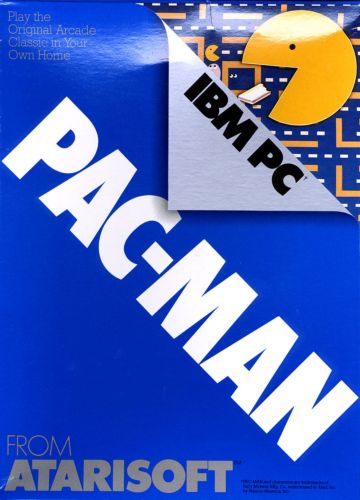
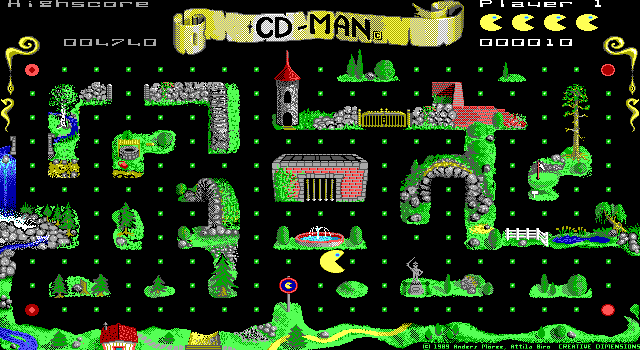
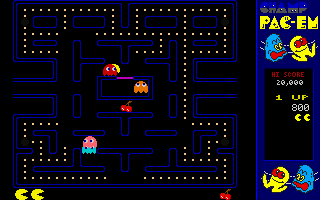
Pac-Man, originally titled Puck Man in Japan, is a 1980 maze video game developed and published by Namco for arcades. It was released in Japan on May 22, 1980 and by Midway Manufacturing in North America in October 1980. The player controls Pac-Man, who must eat all the dots inside an enclosed maze while avoiding four colored ghosts. Eating large flashing dots called "Power Pellets" causes the ghosts to temporarily turn blue and vulnerable, allowing Pac-Man to eat the ghosts for bonus points.
Pac-Man was designed by Toru Iwatani, who led a nine-man team; the game's development began in early 1979. Iwatani wanted to create a game that could appeal to women as well as men, because most video games of the time had themes that appealed to traditionally masculine interests, such as war or sports. Although the inspiration for the Pac-Man character was the image of a pizza with a slice removed, Iwatani has said he rounded out the Japanese character for mouth, kuchi (Japanese: 口). The in-game characters were made to be cute and colorful to appeal to younger players. The original Japanese title of Puck Man was derived from the Japanese phrase paku paku taberu, which refers to gobbling something up; the title was changed to Pac-Man for the North American release due to fears of vandals defacing cabinets by converting the P into an F, as in fuck.
From Wikipedia's article Pac-Man
Controls
This is a PC game: it uses the keyboard the way it did under MS-DOS, and the mouse where the game supports it. Click the game screen first so it gets your key presses.
Many DOS games start with a menu or ask a question first — read the screen and answer with the keyboard. Arrow keys, Enter, Space, Ctrl and Alt are the usual game keys.
Live chat
Connecting…
Controls
This is a PC game: it uses the keyboard the way it did under MS-DOS, and the mouse where the game supports it. Click the game screen first so it gets your key presses.
Many DOS games start with a menu or ask a question first — read the screen and answer with the keyboard. Arrow keys, Enter, Space, Ctrl and Alt are the usual game keys.
5.0 Outstanding!
CVG 9/10 · 1 review
Review scorecard
- Graphics 5.0 out of 5 Overall fallback
- Sound 5.0 out of 5 Overall fallback
- Control 5.0 out of 5 Overall fallback
- Fun Factor 5.0 out of 5 Overall fallback
Overall fallback: CVG 9/10 · 1 review. Overall source The same 90/100 overall rating fills missing categories using the face scale; these are not separate category scores.
What the reviews talk about
Key wordscuteannoyingoriginal
What the critics said
Play Meter magazine previewed the game and called it "a cute game which appears to grow on players, something which cute games are not prone to do", saying that there's "more to the game than at first appears" but criticized the sound as a drawback, saying it is "good for awhile, then becomes annoying".
— Play Meter
From the Reception section of Wikipedia's Pac-Man article.
Scores
- 90 Computer and Video Games 9/10 (Atari 400/800)
- – Computer Games1984 Classic (computers) ; Positive (IBM PC)
- 100 Eurogamer2007 10/10 (Virtual Console) · other versions
- 90 AllGame1998 5/5 (Arcade) ; 4/5 (NES) · other versions
- 80 Mean Machines 80% (Game Boy) · other versions
- 80 Popular Computing Weekly1984 4/5 (VIC-20) · other versions
- 70 IGN1999 7/10 (Neo Geo Pocket) · other versions
From the review table in Wikipedia's Pac-Man article.
Comments