Killer Instinct

358K plays 1994 #Action#Fighting
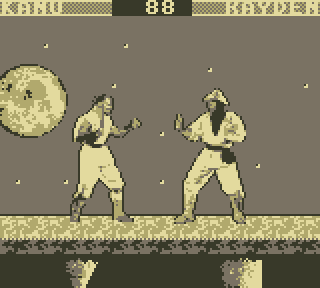
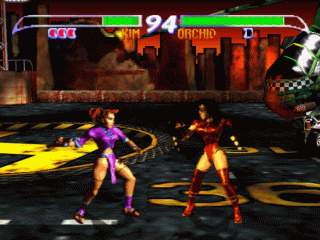
Killer Instinct is a 1994 fighting game developed by Rare and published by Nintendo for consoles. It was originally released for arcades by publisher Midway in October 1994, and ported to both the Super Nintendo Entertainment System and the Game Boy the following year. The game's plot involves an all-powerful corporation organizing a fighting tournament. The story was adapted in a limited comic book series published under the short-lived Acclaim Comics imprint.
According to Ken Lobb, during his time at Namco Hometek, the groundwork for Killer Instinct started as a Namco's fighting game project in the early planning stages, titled Melee (which itself later became WeaponLord). Aspects of Killer Instinct's core gameplay were influenced from SNK fighting games, namely both the World Heroes and the Fatal Fury series, particularly the characters Kim Dragon and Kim Kaphwan.
Killer Instinct featured more detailed graphics and more diverse characters than any other games of its genre as well as some gameplay elements unique to fighting games of the time. Instead of fighting enemies in best-of-three-rounds bouts, each player has two life bars. The player that depletes the other player's life bars first wins the match. The game also introduced "auto-doubles", a feature which allows players to press a certain sequence of buttons to make characters automatically perform combos on opponents. Also featured in the game are "combo breakers", special defensive moves that can interrupt combos.
From Wikipedia's article Killer Instinct (1994 video game)
Keyboard controls
| Game Boy | Player 1 |
|---|---|
| D-pad | ↑↓←→ |
| B | Z |
| A | X |
| Select | Shift |
| Start | Enter |
Hotkeys
- 1 Quick save state
- 2 Quick load state
- 3 Change save slot
Gamepads are detected when you press a button. Remap any key from the emulator’s Controls menu (gear icon).
From the manual, pages 2–3
Live chat
Connecting…
Keyboard controls
| Game Boy | Player 1 |
|---|---|
| D-pad | ↑↓←→ |
| B | Z |
| A | X |
| Select | Shift |
| Start | Enter |
Hotkeys
- 1 Quick save state
- 2 Quick load state
- 3 Change save slot
Gamepads are detected when you press a button. Remap any key from the emulator’s Controls menu (gear icon).
From the manual, pages 2–3
4.5 Great job!
Critics 87 · 7 reviews
Review scorecard
- Graphics 4.5 out of 5 Overall fallback
- Sound 4.5 out of 5 Overall fallback
- Control 4.5 out of 5 Overall fallback
- Fun Factor 4.5 out of 5 Overall fallback
Overall fallback: Critics 87 · 7 reviews. Overall source The same 87/100 overall rating fills missing categories using the face scale; these are not separate category scores.
What the reviews talk about
Key wordsawkwardstunningoutstandingimpressiveaddictiveeasy
What the critics said
An early 1995 article on the fighting game industry in Electronic Gaming Monthly stated that "for now, the undisputed king at the arcades is Killer Instinct".
— Electronic Gaming Monthly, 1995
They concluded that "this version of Killer isn't flawless, but it is surprisingly addictive and fun to play".
— GamePro, 1995
The four reviewers of Electronic Gaming Monthly panned the Game Boy version, unanimously concluding it to be "an arcade translation that should never have been attempted on the Game Boy".
— Electronic Gaming Monthly
GamePro, in contrast, declared it to be second only to the Game Boy version of Street Fighter II among portable fighting games, arguing that the two-button control is "a little awkward but still masterable" and that the graphics are less than outstanding only when unfairly compared to the SNES version.
— GamePro, 1996
In 2004, GamesTM called it possibly "the best combo-heavy fighter ever".
— GamesTM
Next Generation reviewed the arcade version of the game and wrote that "it's not the breakthrough title we're all waiting for — and sooner a new genre has to explode. But for the moment at least, Nintendo's plans for Ultra 64 seem to be progressing smoothly".
— Next Generation, 1995 · about another version
Computer and Video Games gave the game a review score of 93%, adding: "Rare weren't lying when they said the home version would play better than the coin-op: no-one realised they were talking about the SNES!"
— Computer and Video Games · about another version
Next Generation reviewed the Super NES version of the game: "Nintendo and Rare have managed one very impressive trick: getting the 16-bit Super NES to display 512 colors at once, twice the usual number, which gives the graphics an extra gloss".
— Next Generation, 1995 · about another version
From the Reception section of Wikipedia's Killer Instinct (1994 video game) article.
Scores
- 95 Total!1995 95/100
- 95 Entertainment Weekly A
- 94 GameFan1995 281/300
- 93 Computer and Video Games 93%
- 91 Official Nintendo Magazine1995 91/100 (GB)
- 80 VideoGames & Computer Entertainment 8/10
- 60 AllGame 4.5/5 (ARC) ; 4.5/5 (SNES) ; 3/5 (GB)
- 78 Electronic Gaming Monthly 7/10, 8.5/10, 7.5/10, 8/10 (SNES) · other versions
- 70 Next Generation 4/5 (ARC) ; 3/5 (SNES) · other versions
From the review table in Wikipedia's Killer Instinct (1994 video game) article.
Comments