Congo Bongo
34K plays 1983 #Action#Platform
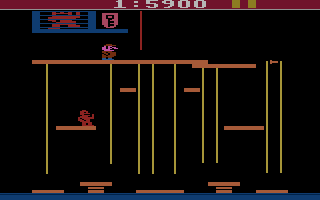
Congo Bongo is an isometric platform arcade game released by Sega in 1983. The game has come to be seen as Sega's answer to the highly successful Donkey Kong game that was released two years prior. The player takes the role of a red-nosed safari hunter who tries to catch an ape named 'Bongo'. The hunter seeks Bongo to exact revenge for an apparent practical joke in which Bongo set fire to the hunter's tent, giving him a literal 'hotfoot'. The game was named by Peter W. Gorrie who was the CFO of Sega at that time. Analysis of the game's ROM code indicates that it was very likely coded at least in part by the company Ikegami Tsushinki.
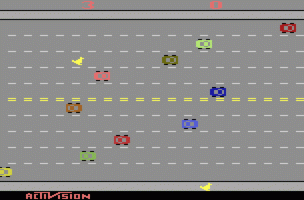
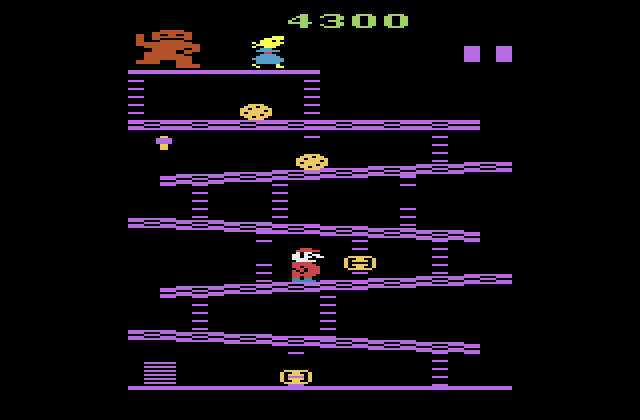
Congo Bongo's gameplay is similar to other popular arcade games of the time, most notably Frogger and Donkey Kong, but is viewed in an isometric perspective, or oblique perspective in some versions. The protagonist has no offensive abilities and thus, the player must jump to avoid enemies (and obstacles) to complete a level. Like Donkey Kong, the levels are composed of a series of four single screens that loop in a higher difficulty when completed.
Text: Wikipedia via RetroGames.cz, licensed under CC BY-SA 3.0
Keyboard controls
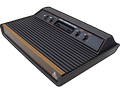
| Atari 2600 | Player 1 | Player 2 |
|---|---|---|
| D-pad | ↑↓←→ | IKJL |
| Fire | Z | N |
| Game Select | Shift | |
| Game Reset | Enter |
Hotkeys
- 1 Quick save state
- 2 Quick load state
- 3 Change save slot
Most games start with Game Reset. Paddle games (Breakout, Kaboom!…) need a gamepad stick.
Gamepads are detected when you press a button. Remap any key from the emulator’s Controls menu (gear icon).
Live chat
Connecting…
Keyboard controls
| Atari 2600 | Player 1 | Player 2 |
|---|---|---|
| D-pad | ↑↓←→ | IKJL |
| Fire | Z | N |
| Game Select | Shift | |
| Game Reset | Enter |
Hotkeys
- 1 Quick save state
- 2 Quick load state
- 3 Change save slot
Most games start with Game Reset. Paddle games (Breakout, Kaboom!…) need a gamepad stick.
Gamepads are detected when you press a button. Remap any key from the emulator’s Controls menu (gear icon).
Comments