Bomberman
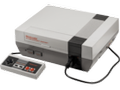
4.6M plays 1985 #Action
Bomberman is a maze-based action game developed by Hudson Soft and released for Nintendo's Family Computer in Japan in 1985, followed by the NES version in North America in 1987. It reworked ideas from Hudson's earlier computer game Bomber Man into the form that established the long-running series. The protagonist is a bomb-making robot forced to work in an underground compound, but a rumour promises that any robot reaching the surface will become human. Escaping requires completing fifty increasingly difficult stages filled with destructible walls, hostile creatures and hidden exits. The simple premise gives the lengthy sequence of mazes a clear objective and leads to a playful ending connected with Hudson's version of Lode Runner.
Bomberman moves through rectangular passages and places bombs that explode after a short delay, sending flames horizontally and vertically until they meet an obstacle. Every enemy must be destroyed before the concealed exit can be used, and both the exit and one power-up are hidden beneath breakable blocks. Poorly positioned bombs can trap Bomberman in his own blast, while chain reactions and narrow passages make planning an escape route essential. Destroying the exposed exit also releases additional enemies, discouraging careless bombing once it has been uncovered.
Power-ups gradually increase the number of bombs that can be placed, extend their blast radius and improve Bomberman's movement speed. Rarer abilities permit him to walk through walls or bombs, survive flames, detonate charges remotely or become temporarily invulnerable. Because useful equipment is accumulated over many stages, avoiding death becomes increasingly important as well as surviving the immediate maze. A password system records progress and selected abilities, allowing the extensive campaign to be continued later.
The fifty stages reuse the same basic visual structure, but new enemy types and denser arrangements steadily demand quicker movement and more deliberate bomb placement. Each creature follows its own movement pattern, and later opponents may pass through walls or require several explosions to defeat. The presentation is technically modest, yet the clear graphics, memorable music and precise controls keep the action readable even when several bombs detonate at once. Unlike the multiplayer contests that later defined the series, this first console instalment is entirely a single-player challenge.
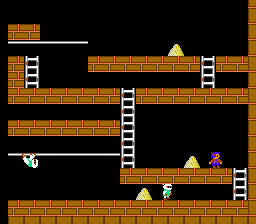
The Famicom and NES release transformed a relatively obscure computer concept into the foundation of one of Hudson Soft's most successful franchises. Its mixture of simple rules, tactical positioning and mounting pressure remains effective despite the repetition and limited variety of the early stages. The design was adapted for MSX as Bomberman Special and later appeared as Game B in Atomic Punk. A Game Boy Advance rerelease in the Famicom Mini and Classic NES Series collections further demonstrated the lasting importance of this formative version.
Text: RetroGames.cz, licensed under CC BY-SA 3.0
Keyboard controls
| NES | Player 1 | Player 2 |
|---|---|---|
| D-pad | ↑↓←→ | IKJL |
| B | Z | N |
| A | X | M |
| Select | Shift | B |
| Start | Enter | Space |
Hotkeys
- 1 Quick save state
- 2 Quick load state
- 3 Change save slot
Gamepads are detected when you press a button. Remap any key from the emulator’s Controls menu (gear icon).
Live chat
Connecting…
Keyboard controls
| NES | Player 1 | Player 2 |
|---|---|---|
| D-pad | ↑↓←→ | IKJL |
| B | Z | N |
| A | X | M |
| Select | Shift | B |
| Start | Enter | Space |
Hotkeys
- 1 Quick save state
- 2 Quick load state
- 3 Change save slot
Gamepads are detected when you press a button. Remap any key from the emulator’s Controls menu (gear icon).
Comments