Ninja Gaiden III: The Ancient Ship of Doom
99K plays 1993 #Action
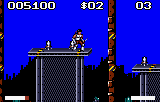
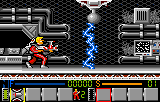
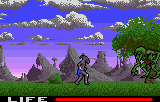
Ninja Gaiden III: The Ancient Ship of Doom is a 1991 platform game developed and published by Tecmo for the Nintendo Entertainment System (NES). It was later ported to the Atari Lynx by Atari Corporation in 1993, and was also re-released as part of Tecmo's Ninja Gaiden Trilogy Super NES compilation in 1995. It was designed by Masato Kato, who took over for Hideo Yoshizawa, the designer of the first two games in the NES series.
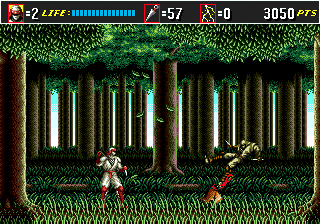
The game is the third installment of the Ninja Gaiden trilogy in terms of release, but is chronologically set between the first two games in the series, Ninja Gaiden and Ninja Gaiden II: The Dark Sword of Chaos. Although the American box art and in-game dialogue suggests that the game takes place years after the first game, The Dark Sword of Chaos supposedly takes place one year after the first, while the Japanese version takes place in between the first two games; the ending screen briefly makes mention of this. The player controls Ryu Hayabusa as he is framed for the murder of Irene Lew and investigates the circumstances behind her death. He eventually discovers a plan by CIA agent Foster and another person named Clancy to utilize an interdimensional rift to create and control a race of energy-infused superhuman mutants. The game features similar gameplay to its previous two Ninja Gaiden titles and includes some new features such as the ability to hang overhead from pipes and sword power-ups.
From Wikipedia's article Ninja Gaiden III: The Ancient Ship of Doom, licensed under CC BY-SA 4.0
Keyboard controls
| Lynx | Player 1 |
|---|---|
| D-pad | ↑↓←→ |
| B | Z |
| A | X |
| Option 1 | A |
| Option 2 | S |
| Pause | Enter |
Hotkeys
- 1 Quick save state
- 2 Quick load state
- 3 Change save slot
Gamepads are detected when you press a button. Remap any key from the emulator’s Controls menu (gear icon).
Live chat
Connecting…
Keyboard controls
| Lynx | Player 1 |
|---|---|
| D-pad | ↑↓←→ |
| B | Z |
| A | X |
| Option 1 | A |
| Option 2 | S |
| Pause | Enter |
Hotkeys
- 1 Quick save state
- 2 Quick load state
- 3 Change save slot
Gamepads are detected when you press a button. Remap any key from the emulator’s Controls menu (gear icon).
4.0 Great job!
Players 81 · 238 votes
No critic scores found for this game: this is the players' rating.
Review scorecard
- Graphics 4.0 out of 5 Overall fallback
- Sound 4.0 out of 5 Overall fallback
- Control 4.0 out of 5 Overall fallback
- Fun Factor 4.0 out of 5 Overall fallback
Overall fallback: Players 81 · 238 votes. The same 81/100 overall rating fills missing categories using the face scale; these are not separate category scores. Player rating; no critic scores available.
What the reviews talk about
Key wordsdifficultweirdfrustratingbizarrecheapeasy
What the critics said
They praised the game, saying that "Ninja Gaiden gets better every time!"
— Electronic Gaming Monthly, 1991
Nintendo Life's Damien McFerran gave lackluster ratings, saying that the game "passed under the radar of many a videogame enthusiast".
— Nintendo Life (Damien McFerran)
The magazine said that Ninja Gaiden III was the best Famicom game in display there, and that it "easily walked away with the best for this system!"
— Electronic Gaming Monthly, 1991· about another version
From the Reception section of Wikipedia's Ninja Gaiden III: The Ancient Ship of Doom article, under CC BY-SA 4.0. The words are the critics'; their full reviews are on the publishers' pages.
Scores
- AllGame Lynx: 3/5 (other versions)
- Electronic Gaming Monthly 1991 Lynx: 8/10, 6/10, 6/10, 6/10 ; NES: 8/10, 8/10, 8/10, 8/10 (other versions)
- Famitsu NES: 6/10, 6/10, 8/10, 6/10 (other versions)
- GamePro Lynx: 17/20 ; NES: 24/25 (other versions)
- IGN 2008 NES: 8/10 (other versions)
- VideoGames & Computer Entertainment 1991 Lynx: 7/10 ; NES: 7/10 ; (other versions)
From the review table of Wikipedia's article. The face takes, first that applies: the Metascore for this platform, GameRankings' average, our average of the critics (one number per publication, a panel averaged), one review alone, the players' rating. Critics and players are never mixed.

Comments