The Flintstones
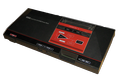
11K plays 1988 #Action
The Flintstones is a 1988 video game based on the 1960s television series The Flintstones. The game was developed by Teque Software Development and published by Grandslam Entertainments. The game was released in Europe in 1988, for Amiga, Amstrad CPC, Atari ST, Commodore 64, MSX, and ZX Spectrum. A version for the Sega Master System was released in 1991.
Each version of The Flintstones features identical gameplay. The game contains four levels. The story begins with Fred Flintstone finishing work at a rock quarry and exclaiming 'Yabba dabba doo!' which is the game's only spoken line of dialogue, achieved through speech synthesis. For the remainder of the game, character interactions are done through speech balloons.
Fred wants to bowl with Barney Rubble at a bowling alley, but Fred's wife, Wilma, tells him that he must paint their living room first for the arrival of her mother. Playing as Fred, the player must paint the room while also preventing his young daughter, Pebbles, from scribbling on the walls. The player's paintbrush is a squirrel. When stopping Pebbles, the squirrel sometimes runs away and must be captured.
In the second level, Fred must race to the bowling alley while avoiding rocks on the road. Hitting a rock results in the vehicle losing a wheel, requiring the player to search for a replacement and get back on the road. The third level is played as a bowling game between Fred and Barney, with the two players taking turns. In the final level, Fred returns home and discovers that Pebbles is missing from the house. He finds her climbing a construction site and competes against Barney to rescue her, while avoiding nuts and bolts.
A practice mode allows the player to explore each area. A rendition of the theme music from the television series was created by Ben Daglish, and is present throughout the game, except for the ZX Spectrum version.
Text: Wikipedia via RetroGames.cz, licensed under CC BY-SA 3.0
Keyboard controls
| SMS | Player 1 | Player 2 |
|---|---|---|
| D-pad | ↑↓←→ | IKJL |
| Button 1 | Z | N |
| Button 2 | X | M |
| Pause | Enter |
Hotkeys
- 1 Quick save state
- 2 Quick load state
- 3 Change save slot
Gamepads are detected when you press a button. Remap any key from the emulator’s Controls menu (gear icon).
Live chat
Connecting…
Keyboard controls
| SMS | Player 1 | Player 2 |
|---|---|---|
| D-pad | ↑↓←→ | IKJL |
| Button 1 | Z | N |
| Button 2 | X | M |
| Pause | Enter |
Hotkeys
- 1 Quick save state
- 2 Quick load state
- 3 Change save slot
Gamepads are detected when you press a button. Remap any key from the emulator’s Controls menu (gear icon).
Comments