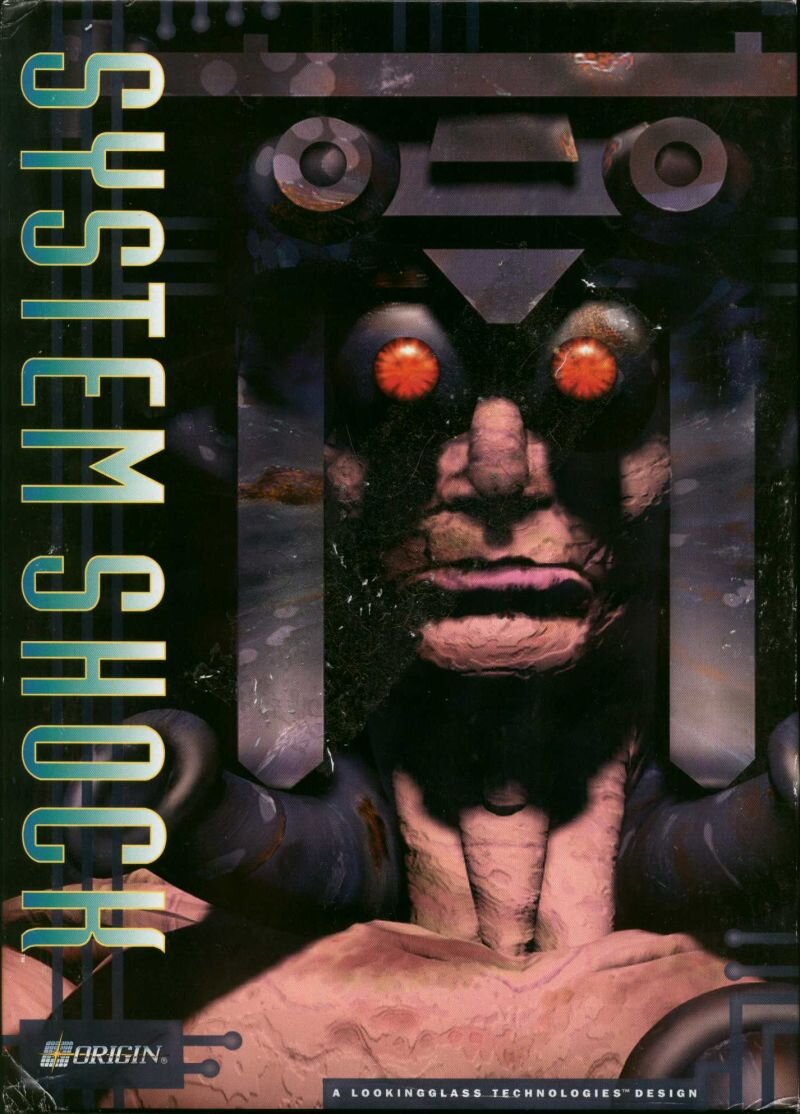
System Shock
0 plays 1994 #Shooter
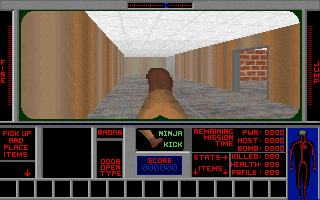
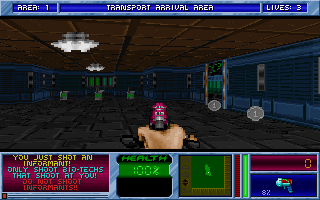
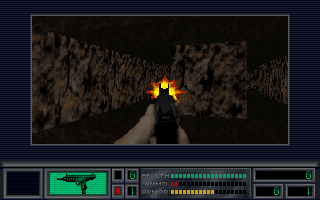
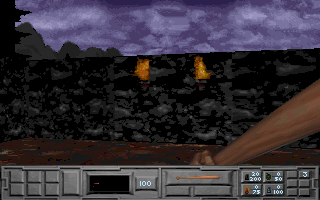
System Shock is a 1994 first-person action-adventure video game developed by LookingGlass Technologies and published by Origin Systems. It was directed by Doug Church with Warren Spector serving as producer. The game is set aboard a space station in a cyberpunk vision of the year 2072. Assuming the role of a nameless security hacker, the player attempts to hinder the plans of a malevolent artificial intelligence called SHODAN.
System Shock's 3D engine, physics simulation and complex gameplay have been cited as both innovative and influential. The developers sought to build on the emergent gameplay and immersive environments of their previous games, Ultima Underworld: The Stygian Abyss and Ultima Underworld II: Labyrinth of Worlds, by streamlining their mechanics into a more "integrated whole"; it is considered one of the defining examples of an immersive sim.
Critics praised System Shock and hailed it as a major breakthrough in its genre. It was later placed on multiple hall of fame lists. The game was a moderate commercial success, with sales exceeding 170,000 copies, but Looking Glass ultimately lost money on the project. A sequel, System Shock 2, was released by Looking Glass Studios and offshoot developer Irrational Games in 1999. The 2000 game Deus Ex (produced and directed by Spector), the 2007 game BioShock, and the 2017 game Prey are spiritual successors to the two games. A remake by Nightdive Studios was released on May 30, 2023.
From Wikipedia's article System Shock
Controls
This is a PC game: it uses the keyboard the way it did under MS-DOS, and the mouse where the game supports it. Click the game screen first so it gets your key presses.
Many DOS games start with a menu or ask a question first — read the screen and answer with the keyboard. Arrow keys, Enter, Space, Ctrl and Alt are the usual game keys.
Live chat
Connecting…
Controls
This is a PC game: it uses the keyboard the way it did under MS-DOS, and the mouse where the game supports it. Click the game screen first so it gets your key presses.
Many DOS games start with a menu or ask a question first — read the screen and answer with the keyboard. Arrow keys, Enter, Space, Ctrl and Alt are the usual game keys.
4.5 Great job!
Critics 89 · 7 reviews
Review scorecard
- Graphics 4.5 out of 5 Overall fallback
- Sound 4.5 out of 5 Overall fallback
- Control 4.5 out of 5 Overall fallback
- Fun Factor 4.5 out of 5 Overall fallback
Overall fallback: Critics 89 · 7 reviews. Overall source The same 89/100 overall rating fills missing categories using the face scale; these are not separate category scores.
What the reviews talk about
Key wordsimmersiveconfusingoutstandingcomplexshortdifficult
What the critics said
Maximum PC believed that the game did not reach "blockbuster" status, but was successful enough to "keep Looking Glass afloat".
— Maximum PC, 2000
Computer Gaming World praised the game's scale, physics system, and true 3D environments; the magazine extolled the presentation of Cyberspace as "nothing short of phenomenal".
— Computer Gaming World
PC Gamer US wrote, "System Shock smokes. It is the most fully immersive game world I have ever experienced".
— PC Gamer
Next Generation Magazine summarized the game as "a great blend of strategy and action backed up with all the extras".
— Next Generation, 1995
In 1998, PC Gamer declared it the 6th-best computer game ever released, and the editors called it "one of the finest games ever due to its seductive game design that blended a fantastic storyline with meaningful, suspenseful action in a way that has rarely been equaled".
— PC Gamer, 1998
From the Reception section of Wikipedia's System Shock article.
Scores
- 100 Boston Herald1994 5/5
- 96 PC Gamer (US)1995 96%
- 90 Computer Gaming World1994 4.5/5
- 90 PC Gamer (UK)1994 90%
- 89 PC Format1995 89%
- 80 Next Generation 4/5
- 80 MacUser1997 4/5
From the review table in Wikipedia's System Shock article.
Comments