Galaga
1.2M plays 1981 #Action#Shooter
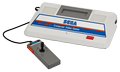
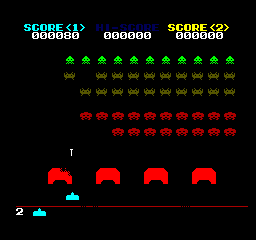
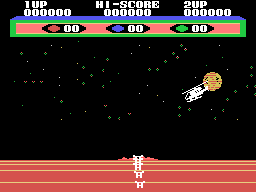
Galaga is a fixed shooter created by Namco for Japanese arcades in 1981 and distributed in North America by Midway. It followed the 1979 game Galaxian and transformed its basic formation-shooting design into a faster and more varied contest for high scores. Sega created this home conversion for the SG-1000 under the title Sega-Galaga and released it during the console's early life in Japan. The player controls a starfighter confined to horizontal movement along the bottom of the screen and must survive increasingly aggressive waves of insect-like aliens.
Each stage begins with enemies entering the screen in carefully choreographed groups before settling into a formation near the top. They then break away in diving attacks, fire at the player's position and attempt to collide with the fighter. New attack patterns are introduced as the stage count rises, and enemies become more dangerous while entering the formation. Clearing every alien advances the game, while losing the final reserve fighter ends the attempt and records the player's shooting accuracy.
Galaga's most distinctive idea is the tractor beam used by the larger Boss Galaga. If the player's fighter is captured, it is carried into the enemy formation and may later return as a hostile escort. Destroying the Boss while it is diving can rescue the captive ship and join it to the current fighter, producing a Dual Fighter with twice the firepower. The reward is substantial, but the combined craft is also twice as wide and therefore much easier to hit, turning a deliberate loss into a memorable risk-and-reward decision.
This conversion concentrates on the regular combat stages and omits the arcade game's Challenging Stages. Progress therefore consists of an uninterrupted sequence of formations and diving attacks, without the non-hostile bonus rounds that periodically test pure accuracy in the original. The simpler structure makes the action more repetitive, but the gradual rise in speed and aggression still provides a clear difficulty curve and keeps the pursuit of a higher score at the centre of play.
Beneath its simple controls, the game rewards restraint and observation. Firing constantly can leave both permitted shots travelling harmlessly near the top of the screen, while waiting for a diving enemy to approach creates a better chance of scoring and surviving. Different aliens are worth more points when destroyed in flight than when sitting in formation, and the hit-ratio display encourages accurate shooting. A second player can join in an alternating contest, making the score table and survival time the principal measures of success.
Sega-Galaga necessarily reduces the detail, colour and sound of Namco's arcade hardware, and it omits the Challenging Stages entirely. The formation-based shooting, diving attacks and dangerous tractor beam nevertheless survive, giving the cartridge the essential rhythm of Galaga rather than merely borrowing its name. Movement can feel stiffer and the simplified display makes this a less faithful conversion than the NES or Atari 7800 editions, but it remains an enjoyable early SG-1000 shooter and an interesting example of Sega adapting another company's arcade hit for its first home console.
Text: RetroGames.cz, licensed under CC BY-SA 3.0
Keyboard controls
| SG-1000 | Player 1 | Player 2 |
|---|---|---|
| D-pad | ↑↓←→ | IKJL |
| Button 1 | Z | N |
| Button 2 | X | M |
| Pause | Enter |
Hotkeys
- 1 Quick save state
- 2 Quick load state
- 3 Change save slot
Gamepads are detected when you press a button. Remap any key from the emulator’s Controls menu (gear icon).
Comments