Bishoujo Senshi Sailor Moon
0 plays 1994 #Action
Sailor Moon is a side-scrolling beat 'em up video game originally developed and released by Angel in Japan on August 27, 1993 and later in France and Spain in November 1994 by Bandai for the Super Nintendo Entertainment System. It is the second game to be created by Angel based upon Naoko Takeuchi's Sailor Moon shōjo manga and anime series, the first for the Super NES and one of the few Sailor Moon titles that had an official international release.
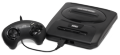
Following the first season of the anime series, which adapted the first arc of the manga, the players control one of the five original Inner Sailor Guardians and fight against enemies across several locations in order to protect Earth from the Dark Kingdom, a group of antagonists led by Queen Beryl who previously destroyed the ancient Moon Kingdom as they attempt to steal life energy from humans and the Silver Crystal to free Queen Metaria from her imprisonment. Due to the success of Sailor Moon for Game Boy in Japan, Angel wanted to develop a project for the Super NES with the aim to appeal towards fans of the series. The title was later ported to the Sega Mega Drive, featuring various changes compared to the original SNES version.
Sailor Moon was met with mixed reception from critics since its release on both SNES and Mega Drive. A sequel, Bishōjo Senshi Sailor Moon R, was released later in 1993 by Bandai exclusively for the SNES.
This is the Japanese release, so its text is in Japanese.
From Wikipedia's article Sailor Moon (1993 video game)
Keyboard controls
| Genesis | Player 1 | Player 2 |
|---|---|---|
| D-pad | ↑↓←→ | IKJL |
| A | Z | N |
| B | X | M |
| C | C | , |
| X | A | Y |
| Y | S | U |
| Z | D | O |
| Mode | Shift | B |
| Start | Enter | Space |
Hotkeys
- 1 Quick save state
- 2 Quick load state
- 3 Change save slot
X, Y and Z are for six-button games such as Street Fighter II.
Gamepads are detected when you press a button. Remap any key from the emulator’s Controls menu (gear icon).
Live chat
Connecting…
Keyboard controls
| Genesis | Player 1 | Player 2 |
|---|---|---|
| D-pad | ↑↓←→ | IKJL |
| A | Z | N |
| B | X | M |
| C | C | , |
| X | A | Y |
| Y | S | U |
| Z | D | O |
| Mode | Shift | B |
| Start | Enter | Space |
Hotkeys
- 1 Quick save state
- 2 Quick load state
- 3 Change save slot
X, Y and Z are for six-button games such as Street Fighter II.
Gamepads are detected when you press a button. Remap any key from the emulator’s Controls menu (gear icon).
2.0 Could be better
Critics 58 · 11 reviews
Review scorecard
- Graphics 2.0 out of 5 Overall fallback
- Sound 2.0 out of 5 Overall fallback
- Control 2.0 out of 5 Overall fallback
- Fun Factor 2.0 out of 5 Overall fallback
Overall fallback: Critics 58 · 11 reviews. Overall source The same 58/100 overall rating fills missing categories using the face scale; these are not separate category scores.
What the reviews talk about
Key wordsrepetitivefluidmonotonousimpressiveoriginalfun
What the critics said
Computer and Video Games' Deniz Ahmet agreed, commending the audiovisual presentation but criticized the limited controls and moveset, as well as enemy AI, calling it "Unrewarding, unimaginative and unwanted."
— Computer and Video Games, 1994
From the Reception section of Wikipedia's Sailor Moon (1993 video game) article.
Scores
- 84 Superjuegos (SNES) 84/100
- 76 HobbyConsolas (SNES) 76/100
- 69 Mega Console (Mega Drive) 69/100
- 68 Computer+Videogiochi (Mega Drive) 68/100
- 60 Consoles + (Mega Drive) 60%
- 53 Beep! MegaDrive (Mega Drive) 5.25/10
- 53 Computer and Video Games (SNES) 53/100
- 53 Famitsu1994 (SNES) 21/40 ; (Mega Drive) 5/10, 5/10, 6/10, 5/10
- 43 Mega Fun (Mega Drive) 43%
- 40 Player One (SNES) 40%
- 40 Nintendo Magazine System (SNES) 40/100
- – Total! (SNES) 3+
From the review table in Wikipedia's Sailor Moon (1993 video game) article.
Comments